Showing posts with label Lucy Maud Montgomery. Show all posts

Monday, December 23, 2013

Christmas at Red Butte

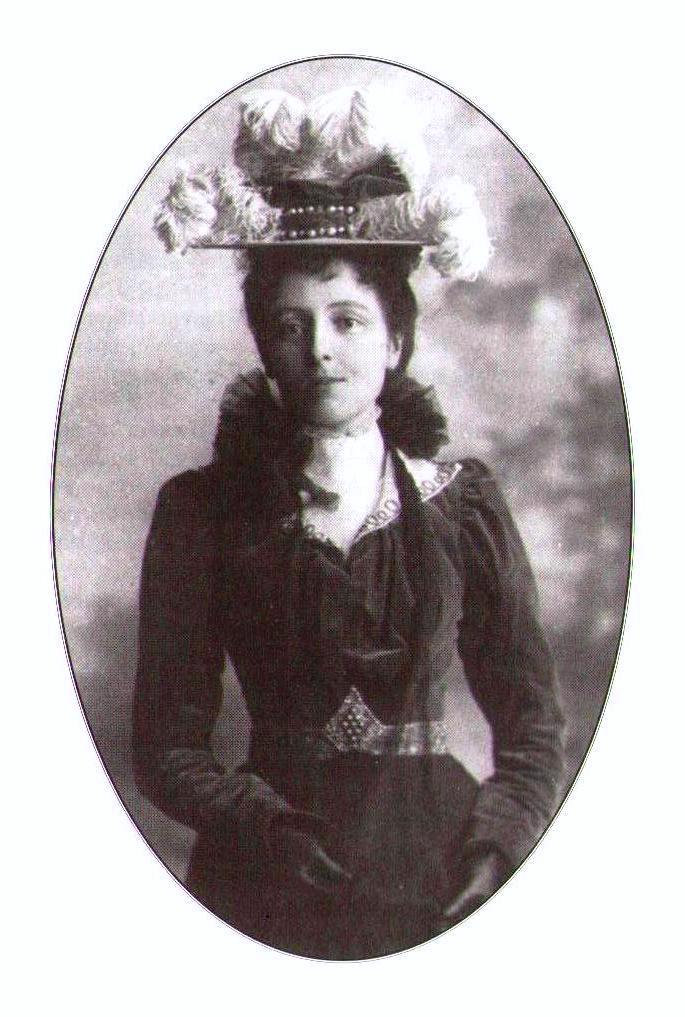
By Lucy Maud Montgomery


"Of course Santa Claus will come," said Jimmy Martin confidently. Jimmy was ten, and at ten it is easy to be confident. "Why, he's got to come because it is Christmas Eve, and he always has come. You know that, twins."
Yes, the twins knew it and, cheered by Jimmy's superior wisdom, their doubts passed away. There had been one terrible moment when Theodora had sighed and told them they mustn't be too much disappointed if Santa Claus did not come this year because the crops had been poor, and he mightn't have had enough presents to go around.
"That doesn't make any difference to Santa Claus," scoffed Jimmy. "You know as well as I do, Theodora Prentice, that Santa Claus is rich whether the crops fail or not. They failed three years ago, before Father died, but Santa Claus came all the same. Prob'bly you don't remember it, twins, 'cause you were too little, but I do. Of course he'll come, so don't you worry a mite. And he'll bring my skates and your dolls. He knows we're expecting them, Theodora, 'cause we wrote him a letter last week, and threw it up the chimney. And there'll be candy and nuts, of course, and Mother's gone to town to buy a turkey. I tell you we're going to have a ripping Christmas."
"Well, don't use such slangy words about it, Jimmy-boy," sighed Theodora. She couldn't bear to dampen their hopes any further, and perhaps Aunt Elizabeth might manage it if the colt sold well. But Theodora had her painful doubts, and she sighed again as she looked out of the window far down the trail that wound across the prairie, red-lighted by the declining sun of the short wintry afternoon.
"Do people always sigh like that when they get to be sixteen?" asked Jimmy curiously. "You didn't sigh like that when you were only fifteen, Theodora. I wish you wouldn't. It makes me feel funny—and it's not a nice kind of funniness either."
"It's a bad habit I've got into lately," said Theodora, trying to laugh. "Old folks are dull sometimes, you know, Jimmy-boy."
"Sixteen is awful old, isn't it?" said Jimmy reflectively. "I'll tell you what I'm going to do when I'm sixteen, Theodora. I'm going to pay off the mortgage, and buy mother a silk dress, and a piano for the twins. Won't that be elegant? I'll be able to do that 'cause I'm a man. Of course if I was only a girl I couldn't."
"I hope you'll be a good kind brave man and a real help to your mother," said Theodora softly, sitting down before the cosy fire and lifting the fat little twins into her lap.
"Oh, I'll be good to her, never you fear," assured Jimmy, squatting comfortably down on the little fur rug before the stove—the skin of the coyote his father had killed four years ago. "I believe in being good to your mother when you've only got the one. Now tell us a story, Theodora—a real jolly story, you know, with lots of fighting in it. Only please don't kill anybody. I like to hear about fighting, but I like to have all the people come out alive."
Theodora laughed, and began a story about the Riel Rebellion of '85—a story which had the double merit of being true and exciting at the same time. It was quite dark when she finished, and the twins were nodding, but Jimmy's eyes were wide open and sparkling.
"That was great," he said, drawing a long breath. "Tell us another."
"No, it's bedtime for you all," said Theodora firmly. "One story at a time is my rule, you know."
"But I want to sit up till Mother comes home," objected Jimmy.
"You can't. She may be very late, for she would have to wait to see Mr. Porter. Besides, you don't know what time Santa Claus might come—if he comes at all. If he were to drive along and see you children up instead of being sound asleep in bed, he might go right on and never call at all."
This argument was too much for Jimmy.
"All right, we'll go. But we have to hang up our stockings first. Twins, get yours."
The twins toddled off in great excitement, and brought back their Sunday stockings, which Jimmy proceeded to hang along the edge of the mantel shelf. This done, they all trooped obediently off to bed. Theodora gave another sigh, and seated herself at the window, where she could watch the moonlit prairie for Mrs. Martin's homecoming and knit at the same time.
I am afraid that you will think from all the sighing Theodora was doing that she was a very melancholy and despondent young lady. You couldn't think anything more unlike the real Theodora. She was the jolliest, bravest girl of sixteen in all Saskatchewan, as her shining brown eyes and rosy, dimpled cheeks would have told you; and her sighs were not on her own account, but simply for fear the children were going to be disappointed. She knew that they would be almost heartbroken if Santa Claus did not come, and that this would hurt the patient hardworking little mother more than all else.
Five years before this, Theodora had come to live with Uncle George and Aunt Elizabeth in the little log house at Red Butte. Her own mother had just died, and Theodora had only her big brother Donald left, and Donald had Klondike fever. The Martins were poor, but they had gladly made room for their little niece, and Theodora had lived there ever since, her aunt's right-hand girl and the beloved playmate of the children. They had been very happy until Uncle George's death two years before this Christmas Eve; but since then there had been hard times in the little log house, and though Mrs. Martin and Theodora did their best, it was a woefully hard task to make both ends meet, especially this year when their crops had been poor. Theodora and her aunt had made every sacrifice possible for the children's sake, and at least Jimmy and the twins had not felt the pinch very severely yet.
At seven Mrs. Martins bells jingled at the door and Theodora flew out. "Go right in and get warm, Auntie," she said briskly. "I'll take Ned away and unharness him."
"It's a bitterly cold night," said Mrs. Martin wearily. There was a note of discouragement in her voice that struck dismay to Theodora's heart.
"I'm afraid it means no Christmas for the children tomorrow," she thought sadly, as she led Ned away to the stable. When she returned to the kitchen Mrs. Martin was sitting by the fire, her face in her chilled hand, sobbing convulsively.
"Auntie—oh, Auntie, don't!" exclaimed Theodora impulsively. It was such a rare thing to see her plucky, resolute little aunt in tears. "You're cold and tired—I'll have a nice cup of tea for you in a trice."
"No, it isn't that," said Mrs. Martin brokenly "It was seeing those stockings hanging there. Theodora, I couldn't get a thing for the children—not a single thing. Mr. Porter would only give forty dollars for the colt, and when all the bills were paid there was barely enough left for such necessaries as we must have. I suppose I ought to feel thankful I could get those. But the thought of the children's disappointment tomorrow is more than I can bear. It would have been better to have told them long ago, but I kept building on getting more for the colt. Well, it's weak and foolish to give way like this. We'd better both take a cup of tea and go to bed. It will save fuel."
When Theodora went up to her little room her face was very thoughtful. She took a small box from her table and carried it to the window. In it was a very pretty little gold locket hung on a narrow blue ribbon. Theodora held it tenderly in her fingers, and looked out over the moonlit prairie with a very sober face. Could she give up her dear locket—the locket Donald had given her just before he started for the Klondike? She had never thought she could do such a thing. It was almost the only thing she had to remind her of Donald—handsome, merry, impulsive, warmhearted Donald, who had gone away four years ago with a smile on his bonny face and splendid hope in his heart.
"Here's a locket for you, Gift o' God," he had said gaily—he had such a dear loving habit of calling her by the beautiful meaning of her name. A lump came into Theodora's throat as she remembered it. "I couldn't afford a chain too, but when I come back I'll bring you a rope of Klondike nuggets for it."
Then he had gone away. For two years letters had come from him regularly. Then he wrote that he had joined a prospecting party to a remote wilderness. After that was silence, deepening into anguish of suspense that finally ended in hopelessness. A rumour came that Donald Prentice was dead. None had returned from the expedition he had joined. Theodora had long ago given up all hope of ever seeing Donald again. Hence her locket was doubly dear to her.
But Aunt Elizabeth had always been so good and loving and kind to her. Could she not make the sacrifice for her sake? Yes, she could and would. Theodora flung up her head with a gesture that meant decision. She took out of the locket the bits of hair—her mother's and Donald's—which it contained (perhaps a tear or two fell as she did so) and then hastily donned her warmest cap and wraps. It was only three miles to Spencer; she could easily walk it in an hour and, as it was Christmas Eve, the shops would be open late. She muse walk, for Ned could not be taken out again, and the mare's foot was sore. Besides, Aunt Elizabeth must not know until it was done.
As stealthily as if she were bound on some nefarious errand, Theodora slipped downstairs and out of the house. The next minute she was hurrying along the trail in the moonlight. The great dazzling prairie was around her, the mystery and splendour of the northern night all about her. It was very calm and cold, but Theodora walked so briskly that she kept warm. The trail from Red Butte to Spencer was a lonely one. Mr. Lurgan's house, halfway to town, was the only dwelling on it.
When Theodora reached Spencer she made her way at once to the only jewellery store the little town contained. Mr. Benson, its owner, had been a friend of her uncle's, and Theodora felt sure that he would buy her locket. Nevertheless her heart beat quickly, and her breath came and went uncomfortably fast as she went in. Suppose he wouldn't buy it. Then there would be no Christmas for the children at Red Butte.
"Good evening, Miss Theodora," said Mr. Benson briskly. "What can I do for you?"
"I'm afraid I'm not a very welcome sort of customer, Mr. Benson," said Theodora, with an uncertain smile. "I want to sell, not buy. Could you—will you buy this locket?"
Mr. Benson pursed up his lips, took up the locket, and examined it. "Well, I don't often buy second-hand stuff," he said, after some reflection, "but I don't mind obliging you, Miss Theodora. I'll give you four dollars for this trinket."
Theodora knew the locket had cost a great deal more than that, but four dollars would get what she wanted, and she dared not ask for more. In a few minutes the locket was in Mr. Benson's possession, and Theodora, with four crisp new bills in her purse, was hurrying to the toy store. Half an hour later she was on her way back to Red Butte, with as many parcels as she could carry—Jimmy's skates, two lovely dolls for the twins, packages of nuts and candy, and a nice plump turkey. Theodora beguiled her lonely tramp by picturing the children's joy in the morning.
About a quarter of a mile past Mr. Lurgan's house the trail curved suddenly about a bluff of poplars. As Theodora rounded the turn she halted in amazement. Almost at her feet the body of a man was lying across the road. He was clad in a big fur coat, and had a fur cap pulled well down over his forehead and ears. Almost all of him that could be seen was a full bushy beard. Theodora had no idea who he was, or where he had come from. But she realized that he was unconscious, and that he would speedily freeze to death if help were not brought. The footprints of a horse galloping across the prairie suggested a fall and a runaway, but Theodora did not waste time in speculation. She ran back at full speed to Mr. Lurgan's, and roused the household. In a few minutes Mr. Lurgan and his son had hitched a horse to a wood-sleigh, and hurried down the trail to the unfortunate man.
Theodora, knowing that her assistance was not needed, and that she ought to get home as quickly as possible, went on her way as soon as she had seen the stranger in safe keeping. When she reached the little log house she crept in, cautiously put the children's gifts in their stockings, placed the turkey on the table where Aunt Elizabeth would see it the first thing in the morning, and then slipped off to bed, a very weary but very happy girl.
The joy that reigned in the little log house the next day more than repaid Theodora for her sacrifice.
"Whoopee, didn't I tell you that Santa Claus would come all right!" shouted the delighted Jimmy. "Oh, what splendid skates!"
The twins hugged their dolls in silent rapture, but Aunt Elizabeth's face was the best of all.
Then the dinner had to be prepared, and everybody had a hand in that. Just as Theodora, after a grave peep into the oven, had announced that the turkey was done, a sleigh dashed around the house. Theodora flew to answer the knock at the door, and there stood Mr. Lurgan and a big, bewhiskered, fur-coated fellow whom Theodora recognized as the stranger she had found on the trail. But—was he a stranger? There was something oddly familiar in those merry brown eyes. Theodora felt herself growing dizzy.
"Donald!" she gasped. "Oh, Donald!"
And then she was in the big fellow's arms, laughing and crying at the same time.
Donald it was indeed. And then followed half an hour during which everybody talked at once, and the turkey would have been burned to a crisp had it not been for the presence of mind of Mr. Lurgan who, being the least excited of them all, took it out of the oven, and set it on the back of the stove.
"To think that it was you last night, and that I never dreamed it," exclaimed Theodora. "Oh, Donald, if I hadn't gone to town!"
"I'd have frozen to death, I'm afraid," said Donald soberly. "I got into Spencer on the last train last night. I felt that I must come right out—I couldn't wait till morning. But there wasn't a team to be got for love or money—it was Christmas Eve and all the livery rigs were out. So I came on horseback. Just by that bluff something frightened my horse, and he shied violently. I was half asleep and thinking of my little sister, and I went off like a shot. I suppose I struck my head against a tree. Anyway, I knew nothing more until I came to in Mr. Lurgan's kitchen. I wasn't much hurt—feel none the worse of it except for a sore head and shoulder. But, oh, Gift o' God, how you have grown! I can't realize that you are the little sister I left four years ago. I suppose you have been thinking I was dead?"
"Yes, and, oh, Donald, where have you been?"
"Well, I went way up north with a prospecting party. We had a tough time the first year, I can tell you, and some of us never came back. We weren't in a country where post offices were lying round loose either, you see. Then at last, just as we were about giving up in despair, we struck it rich. I've brought a snug little pile home with me, and things are going to look up in this log house, Gift o' God. There'll be no more worrying for you dear people over mortgages."
"I'm so glad—for Auntie's sake," said Theodora, with shining eyes. "But, oh, Donald, it's best of all just to have you back. I'm so perfectly happy that I don't know what to do or say."
"Well, I think you might have dinner," said Jimmy in an injured tone. "The turkey's getting stone cold, and I'm most starving. I just can't stand it another minute."
So, with a laugh, they all sat down to the table and ate the merriest Christmas dinner the little log house had ever known.

Monday, November 4, 2013

A Redeeming Sacrifice.

By Lucy Maud Montgomery


The dance at Byron Lyall's was in full swing. Toff Leclerc, the best fiddler in three counties, was enthroned on the kitchen table and from the glossy brown violin, which his grandfather brought from Grand Pré, was conjuring music which made even stiff old Aunt Phemy want to show her steps. Around the kitchen sat a row of young men and women, and the open sitting-room doorway was crowded with the faces of non-dancing guests who wanted to watch the sets.
An eight-hand reel had just been danced and the girls, giddy from the much swinging of the final figure, had been led back to their seats. Mattie Lyall came out with a dipper of water and sprinkled the floor, from which a fine dust was rising. Toff's violin purred under his hands as he waited for the next set to form. The dancers were slow about it. There was not the rush for the floor that there had been earlier in the evening, for the supper table was now spread in the dining-room and most of the guests were hungry.
"Fill up dere, boys," shouted the fiddler impatiently. "Bring out your gals for de nex' set."
After a moment Paul King led out Joan Shelley from the shadowy corner where they had been sitting. They had already danced several sets together; Joan had not danced with anybody else that evening. As they stood together under the light from the lamp on the shelf above them, many curious and disapproving eyes watched them. Connor Mitchell, who had been standing in the open outer doorway with the moonlight behind him, turned abruptly on his heel and went out.
Paul King leaned his head against the wall and watched the watchers with a smiling, defiant face as they waited for the set to form. He was a handsome fellow, with the easy, winning ways that women love. His hair curled in bronze masses about his head; his dark eyes were long and drowsy and laughing; there was a swarthy bloom on his round cheeks; and his lips were as red and beguiling as a girl's. A bad egg was Paul King, with a bad past and a bad future. He was shiftless and drunken; ugly tales were told of him. Not a man in Lyall's house that night but grudged him the privilege of standing up with Joan Shelley.
Joan was a slight, blossom-like girl in white, looking much like the pale, sweet-scented house rose she wore in her dark hair. Her face was colourless and young, very pure and softly curved. She had wonderfully sweet, dark blue eyes, generally dropped down, with notably long black lashes. There were many showier girls in the groups around her, but none half so lovely. She made all the rosy-cheeked beauties seem coarse and over-blown.
She left in Paul's clasp the hand by which he had led her out on the floor. Now and then he shifted his gaze from the faces before him to hers. When he did, she always looked up and they exchanged glances as if they had been utterly alone. Three other couples gradually took the floor and the reel began. Joan drifted through the figures with the grace of a wind-blown leaf. Paul danced with rollicking abandon, seldom taking his eyes from Joan's face. When the last mad whirl was over, Joan's brother came up and told her in an angry tone to go into the next room and dance no more, since she would dance with only one man. Joan looked at Paul. That look meant that she would do as he, and none other, told her. Paul nodded easily—he did not want any fuss just then—and the girl went obediently into the room. As she turned from him, Paul coolly reached out his hand and took the rose from her hair; then, with a triumphant glance around the room, he went out.
The autumn night was very clear and chill, with a faint, moaning wind blowing up from the northwest over the sea that lay shimmering before the door. Out beyond the cove the boats were nodding and curtsying on the swell, and over the shore fields the great red star of the lighthouse flared out against the silvery sky. Paul, with a whistle, sauntered down the sandy lane, thinking of Joan. How mightily he loved her—he, Paul King, who had made a mock of so many women and had never loved before! Ah, and she loved him. She had never said so in words, but eyes and tones had said it—she, Joan Shelley, the pick and pride of the Harbour girls, whom so many men had wooed, winning their trouble for their pains. He had won her; she was his and his only, for the asking. His heart was seething with pride and triumph and passion as he strode down to the shore and flung himself on the cold sand in the black shadow of Michael Brown's beached boat.
Byron Lyall, a grizzled, elderly man, half farmer, half fisherman, and Maxwell Holmes, the Prospect schoolteacher, came up to the boat presently. Paul lay softly and listened to what they were saying. He was not troubled by any sense of dishonour. Honour was something Paul King could not lose since it was something he had never possessed. They were talking of him and Joan.
"What a shame that a girl like Joan Shelley should throw herself away on a man like that," Holmes said.
Byron Lyall removed the pipe he was smoking and spat reflectively at his shadow.
"Darned shame," he agreed. "That girl's life will be ruined if she marries him, plum' ruined, and marry him she will. He's bewitched her—darned if I can understand it. A dozen better men have wanted her—Connor Mitchell for one. And he's a honest, steady fellow with a good home to offer her. If King had left her alone, she'd have taken Connor. She used to like him well enough. But that's all over. She's infatuated with King, the worthless scamp. She'll marry him and be sorry for it to her last day. He's bad clear through and always will be. Why, look you, Teacher, most men pull up a bit when they're courting a girl, no matter how wild they've been and will be again. Paul hasn't. It hasn't made any difference. He was dead drunk night afore last at the Harbour head, and he hasn't done a stroke of work for a month. And yet Joan Shelley'll take him."
"What are her people thinking of to let her go with him?" asked Holmes.
"She hasn't any but her brother. He's against Paul, of course, but it won't matter. The girl's fancy's caught and she'll go her own gait to ruin. Ruin, I tell ye. If she marries that handsome ne'er-do-well, she'll be a wretched woman all her days and none to pity her."
The two moved away then, and Paul lay motionless, face downward on the sand, his lips pressed against Joan's sweet, crushed rose. He felt no anger over Byron Lyall's unsparing condemnation. He knew it was true, every word of it. He was a worthless scamp and always would be. He knew that perfectly well. It was in his blood. None of his race had ever been respectable and he was worse than them all. He had no intention of trying to reform because he could not and because he did not even want to. He was not fit to touch Joan's hand. Yet he had meant to marry her!
But to spoil her life! Would it do that? Yes, it surely would. And if he were out of the way, taking his baleful charm out of her life, Connor Mitchell might and doubtless would win her yet and give her all he could not.
The man suddenly felt his eyes wet with tears. He had never shed a tear in his daredevil life before, but they came hot and stinging now. Something he had never known or thought of before entered into his passion and purified it. He loved Joan. Did he love her well enough to stand aside and let another take the sweetness and grace that was now his own? Did he love her well enough to save her from the poverty-stricken, shamed life she must lead with him? Did he love her better than himself?
"I ain't fit to think of her," he groaned. "I never did a decent thing in my life, as they say. But how can I give her up—God, how can I?"
He lay still a long time after that, until the moonlight crept around the boat and drove away the shadow. Then he got up and went slowly down to the water's edge with Joan's rose, all wet with his unaccustomed tears, in his hands. Slowly and reverently he plucked off the petals and scattered them on the ripples, where they drifted lightly off like fairy shallops on moonshine. When the last one had fluttered from his fingers, he went back to the house and hunted up Captain Alec Matheson, who was smoking his pipe in a corner of the verandah and watching the young folks dancing through the open door. The two men talked together for some time.
When the dance broke up and the guests straggled homeward, Paul sought Joan. Rob Shelley had his own girl to see home and relinquished the guardianship of his sister with a scowl. Paul strode out of the kitchen and down the steps at the side of Joan, smiling with his usual daredeviltry. He whistled noisily all the way up the lane.
"Great little dance," he said. "My last in Prospect for a spell, I guess."
"Why?" asked Joan wonderingly.
"Oh, I'm going to take a run down to South America in Matheson's schooner. Lord knows when I'll come back. This old place has got too deadly dull to suit me. I'm going to look for something livelier."
Joan's lips turned ashen under the fringes of her white fascinator. She trembled violently and put one of her small brown hands up to her throat. "You—you are not coming back?" she said faintly.
"Not likely. I'm pretty well tired of Prospect and I haven't got anything to hold me here. Things'll be livelier down south."
Joan said nothing more. They walked along the spruce-fringed roads where the moonbeams laughed down through the thick, softly swaying boughs. Paul whistled one rollicking tune after another. The girl bit her lips and clenched her hands. He cared nothing for her—he had been making a mock of her as of others. Hurt pride and wounded love fought each other in her soul. Pride conquered. She would not let him, or anyone, see that she cared. She would not care!
At her gate Paul held out his hand.
"Well, good-bye, Joan. I'm sailing tomorrow so I won't see you again—not for years likely. You will be some sober old married woman when I come back to Prospect, if I ever do."
"Good-bye," said Joan steadily. She gave him her cold hand and looked calmly into his face without quailing. She had loved him with all her heart, but now a fatal scorn of him was already mingling with her love. He was what they said he was, a scamp without principle or honour.
Paul whistled himself out of the Shelley lane and over the hill. Then he flung himself down under the spruces, crushed his face into the spicy frosted ferns, and had his black hour alone.
But when Captain Alec's schooner sailed out of the harbour the next day, Paul King was on board of her, the wildest and most hilarious of a wild and hilarious crew. Prospect people nodded their satisfaction.
"Good riddance," they said. "Paul King is black to the core. He never did a decent thing in his life."
Starbucks Tazo Tea

Friday, October 25, 2013

A Golden Wedding.

by Lucy Maud Montgomery

The land dropped abruptly down from the gate, and a thick, shrubby growth of young apple orchard almost hid the little weather-grey house from the road. This was why the young man who opened the sagging gate could not see that it was boarded up, and did not cease his cheerful whistling until he had pressed through the crowding trees and found himself almost on the sunken stone doorstep over which in olden days honeysuckle had been wont to arch. Now only a few straggling, uncared-for vines clung forlornly to the shingles, and the windows were, as has been said, all boarded up.
The whistle died on the young man's lips and an expression of blank astonishment and dismay settled down on his face—a good, kindly, honest face it was, although perhaps it did not betoken any pronounced mental gifts on the part of its owner.
"What can have happened?" he said to himself. "Uncle Tom and Aunt Sally can't be dead—I'd have seen their deaths in the paper if they was. And I'd a-thought if they'd moved away it'd been printed too. They can't have been gone long—that flower-bed must have been made up last spring. Well, this is a kind of setback for a fellow. Here I've been tramping all the way from the station, a-thinking how good it would be to see Aunt Sally's sweet old face again, and hear Uncle Tom's laugh, and all I find is a boarded-up house going to seed. S'pose I might as well toddle over to Stetsons' and inquire if they haven't disappeared, too."
He went through the old firs back of the lot and across the field to a rather shabby house beyond. A cheery-faced woman answered his knock and looked at him in a puzzled fashion. "Have you forgot me, Mrs. Stetson? Don't you remember Lovell Stevens and how you used to give him plum tarts when he'd bring your turkeys home?"
Mrs. Stetson caught both his hands in a hearty clasp.
"I guess I haven't forgotten!" she declared. "Well, well, and you're Lovell! I think I ought to know your face, though you've changed a lot. Fifteen years have made a big difference in you. Come right in. Pa, this is Lovell—you mind Lovell, the boy Aunt Sally and Uncle Tom had for years?"
"Reckon I do," drawled Jonah Stetson with a friendly grin. "Ain't likely to forget some of the capers you used to be cutting up. You've filled out considerable. Where have you been for the last ten years? Aunt Sally fretted a lot over you, thinking you was dead or gone to the bad."
Lovell's face clouded.
"I know I ought to have written," he said repentantly, "but you know I'm a terrible poor scholar, and I'd do most anything than try to write a letter. But where's Uncle Tom and Aunt Sally gone? Surely they ain't dead?"
"No," said Jonah Stetson slowly, "no—but I guess they'd rather be. They're in the poorhouse."
"The poorhouse! Aunt Sally in the poorhouse!" exclaimed Lovell.
"Yes, and it's a burning shame," declared Mrs. Stetson. "Aunt Sally's just breaking her heart from the disgrace of it. But it didn't seem as if it could be helped. Uncle Tom got so crippled with rheumatism he couldn't work and Aunt Sally was too frail to do anything. They hadn't any relations and there was a mortgage on the house."
"There wasn't any when I went away."
"No; they had to borrow money six years ago when Uncle Tom had his first spell of rheumatic fever. This spring it was clear that there was nothing for them but the poorhouse. They went three months ago and terrible hard they took it, especially Aunt Sally, I felt awful about it myself. Jonah and I would have took them if we could, but we just couldn't—we've nothing but Jonah's wages and we have eight children and not a bit of spare room. I go over to see Aunt Sally as often as I can and take her some little thing, but I dunno's she wouldn't rather not see anybody than see them in the poorhouse."
Lovell weighed his hat in his hands and frowned over it reflectively.
"Who owns the house now?"
"Peter Townley. He held the mortgage. And all the old furniture was sold too, and that most killed Aunt Sally. But do you know what she's fretting over most of all? She and Uncle Tom will have been married fifty years in a fortnight's time and Aunt Sally thinks it's awful to have to spend their golden wedding anniversary in the poorhouse. She talks about it all the time. You're not going, Lovell"—for Lovell had risen—"you must stop with us, since your old home is closed up. We'll scare you up a shakedown to sleep on and you're welcome as welcome. I haven't forgot the time you caught Mary Ellen just as she was tumbling into the well."
"Thank you, I'll stay to tea," said Lovell, sitting down again, "but I guess I'll make my headquarters up at the station hotel as long as I stay round here. It's kind of more central."
"Got on pretty well out west, hey?" queried Jonah.
"Pretty well for a fellow who had nothing but his two hands to depend on when he went out," said Lovell cautiously. "I've only been a labouring man, of course, but I've saved up enough to start a little store when I go back. That's why I came east for a trip now—before I'd be tied down to business. I was hankering to see Aunt Sally and Uncle Tom once more. I'll never forget how kind and good they was to me. There I was, when Dad died, a little sinner of eleven, just heading for destruction. They give me a home and all the schooling I ever had and all the love I ever got. It was Aunt Sally's teachings made as much a man of me as I am. I never forgot 'em and I've tried to live up to 'em."
After tea Lovell said he thought he'd stroll up the road and pay Peter Townley a call. Jonah Stetson and his wife looked at each other when he had gone.
"Got something in his eye," nodded Jonah. "Him and Peter weren't never much of friends."
"Maybe Aunt Sally's bread is coming back to her after all," said his wife. "People used to be hard on Lovell. But I always liked him and I'm real glad he's turned out so well."
Lovell came back to the Stetsons' the next evening. In the interval he had seen Aunt Sally and Uncle Tom. The meeting had been both glad and sad. Lovell had also seen other people.
"I've bought Uncle Tom's old house from Peter Townley," he said quietly, "and I want you folks to help me out with my plans. Uncle Tom and Aunt Sally ain't going to spend their golden wedding in the poorhouse—no, sir. They'll spend it in their own home with their old friends about them. But they're not to know anything about it till the very night. Do you s'pose any of the old furniture could be got back?"
"I believe every stick of it could," said Mrs. Stetson excitedly. "Most of it was bought by folks living handy and I don't believe one of them would refuse to sell it back. Uncle Tom's old chair is here to begin with—Aunt Sally give me that herself. She said she couldn't bear to have it sold. Mrs. Isaac Appleby at the station bought the set of pink-sprigged china and James Parker bought the grandfather's clock and the whatnot is at the Stanton Grays'."
For the next fortnight Lovell and Mrs. Stetson did so much travelling round together that Jonah said genially he might as well be a bachelor as far as meals and buttons went. They visited every house where a bit of Aunt Sally's belongings could be found. Very successful they were too, and at the end of their jaunting the interior of the little house behind the apple trees looked very much as it had looked when Aunt Sally and Uncle Tom lived there.
Meanwhile, Mrs. Stetson had been revolving a design in her mind, and one afternoon she did some canvassing on her own account. The next time she saw Lovell she said:
"We ain't going to let you do it all. The women folks around here are going to furnish the refreshments for the golden wedding and the girls are going to decorate the house with golden rod."
The evening of the wedding anniversary came. Everybody in Blair was in the plot, including the matron of the poorhouse. That night Aunt Sally watched the sunset over the hills through bitter tears.
"I never thought I'd be celebrating my golden wedding in the poorhouse," she sobbed. Uncle Tom put his twisted hand on her shaking old shoulder, but before he could utter any words of comfort Lovell Stevens stood before them.
"Just get your bonnet on, Aunt Sally," he cried jovially, "and both of you come along with me. I've got a buggy here for you ... and you might as well say goodbye to this place, for you're not coming back to it any more."
"Lovell, oh, what do you mean?" said Aunt Sally tremulously.
"I'll explain what I mean as we drive along. Hurry up—the folks are waiting."
When they reached the little old house, it was all aglow with light. Aunt Sally gave a cry as she entered it. All her old household goods were back in their places. There were some new ones too, for Lovell had supplied all that was lacking. The house was full of their old friends and neighbours. Mrs. Stetson welcomed them home again.
Alibris"Oh, Tom," whispered Aunt Sally, tears of happiness streaming down her old face, "oh, Tom, isn't God good?"
They had a right royal celebration, and a supper such as the Blair housewives could produce. There were speeches and songs and tales. Lovell kept himself in the background and helped Mrs. Stetson cut cake in the pantry all the evening. But when the guests had gone, he went to Aunt Sally and Uncle Tom, who were sitting by the fire.
"Here's a little golden wedding present for you," he said awkwardly, putting a purse into Aunt Sally's hand. "I reckon there's enough there to keep you from ever having to go to the poorhouse again and if not, there'll be more where that comes from when it's done."
There were twenty-five bright twenty-dollar gold pieces in the purse.
"We can't take it, Lovell," protested Aunt Sally. "You can't afford it."
"Don't you worry about that," laughed Lovell. "Out west men don't think much of a little wad like that. I owe you far more than can be paid in cash, Aunt Sally. You must take it—I want to know there's a little home here for me and two kind hearts in it, no matter where I roam."
"God bless you, Lovell," said Uncle Tom huskily. "You don't know what you've done for Sally and me."
That night, when Lovell went to the little bedroom off the parlour—for Aunt Sally, rejoicing in the fact that she was again mistress of a spare room, would not hear of his going to the station hotel—he gazed at his reflection in the gilt-framed mirror soberly.
"You've just got enough left to pay your passage back west, old fellow," he said, "and then it's begin all over again just where you begun before. But Aunt Sally's face was worth it all—yes, sir. And you've got your two hands still and an old couple's prayers and blessings. Not such a bad capital, Lovell, not such a bad capital."